Regulations
Regulators will ask. Your records answer.
MAS expects human oversight of your AI if you are a financial institution in Singapore, and the EU AI Act asks for oversight and logging for high-risk AI. TraceStone helps you show both.
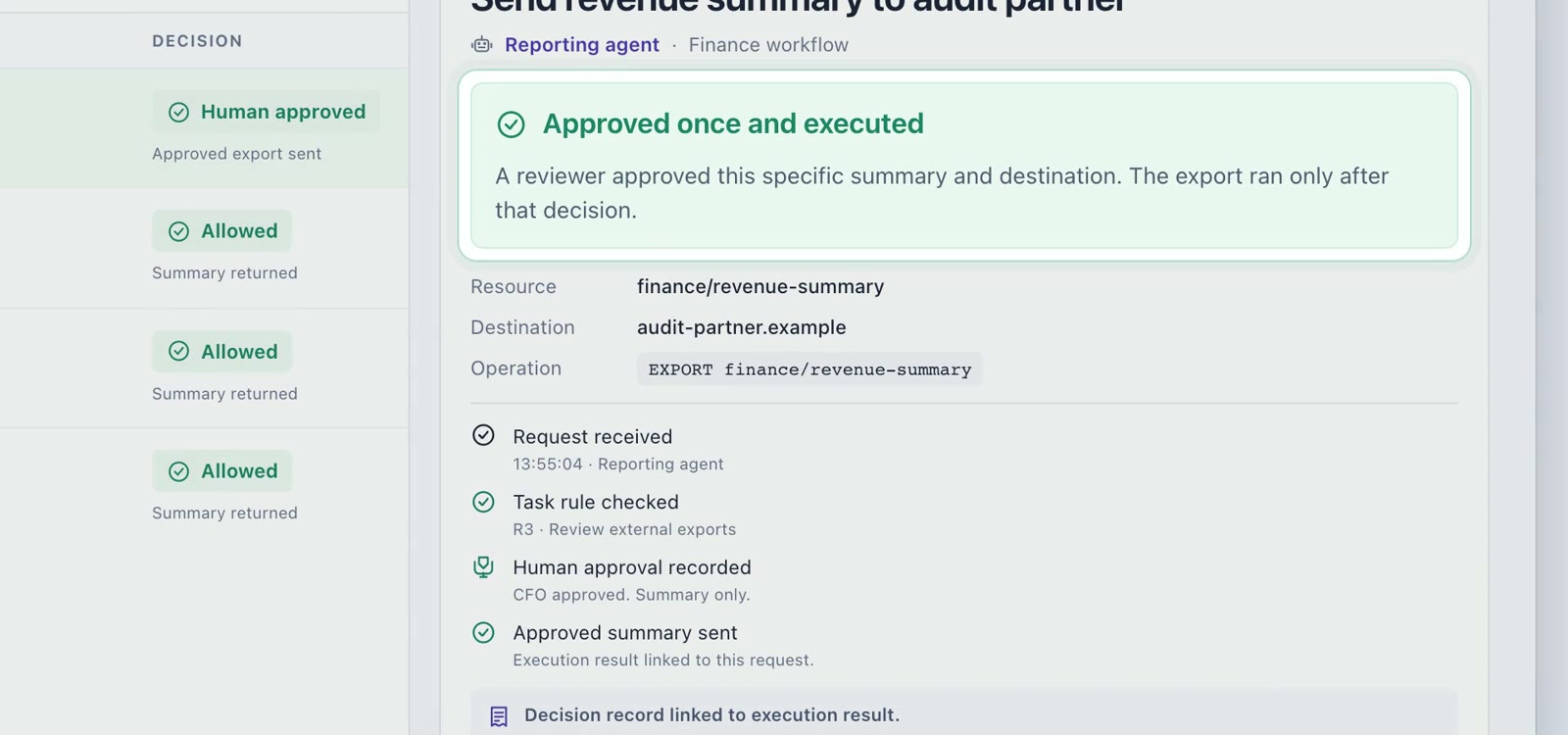
- Human oversight MAS AI Guidelines · EU AI Act Art. 14 Approval recorded
- Check before action MAS SAFR paper Rule checked first
- Records of AI use MAS AI Guidelines · SAFR paper · EU AI Act Art. 12 Linked record
From the TraceStone product
Why now
The rules are written. Your deadline is close.
Regulators now expect you to control and record what your AI does. In Singapore, the MAS Guidelines on AI Risk Management set clear dates for financial institutions.
- Show human oversight Prove that a person approved the risky actions.
- Keep records of AI use Show what each agent did, and when.
- Check before action Follow the MAS SAFR advice: check each action before it runs.
Key AI dates, Oct 2026 to Dec 2028
- 2026
- Oct 2026 · MAS AI Guidelines , Published
- Oct 2026 · SAFR v1.1: check actions first , Published
- Today · Nov 2026
- 2027
- Oct 2027 · AI inventory expected , in 11 months
- Dec 2027 · EU AI Act high-risk rules , in 13 months
- 2028
- Oct 2028 · Human oversight expected , in 23 months
Sources: MAS Guidelines on AI Risk Management (Oct 2026) · MAS SAFR paper v1.1 · EU AI Act
MAS AI Guidelines · Singapore
Your people decide. Your records show it.
If you are a financial institution in Singapore, MAS expects life-cycle controls for your AI, including human oversight, by 7 Oct 2028.
- Approval before risky actions Actions over your limits wait until a person approves them.
- Who approved, and when Each approval is recorded together with the action it allowed.
- A record of every action See what each agent did, and when, in signed records.
- 7 Oct 2026 Guidelines issued , Published
- 7 Oct 2027 AI inventory expected , in 11 months
- 7 Oct 2028 Life-cycle controls, including human oversight , in 23 months
MAS SAFR paper
Check before it runs. Keep a sealed log.
The SAFR paper is an industry white paper, not regulatory guidance. It recommends checking each agent action before it runs, and keeping a tamper-evident log.
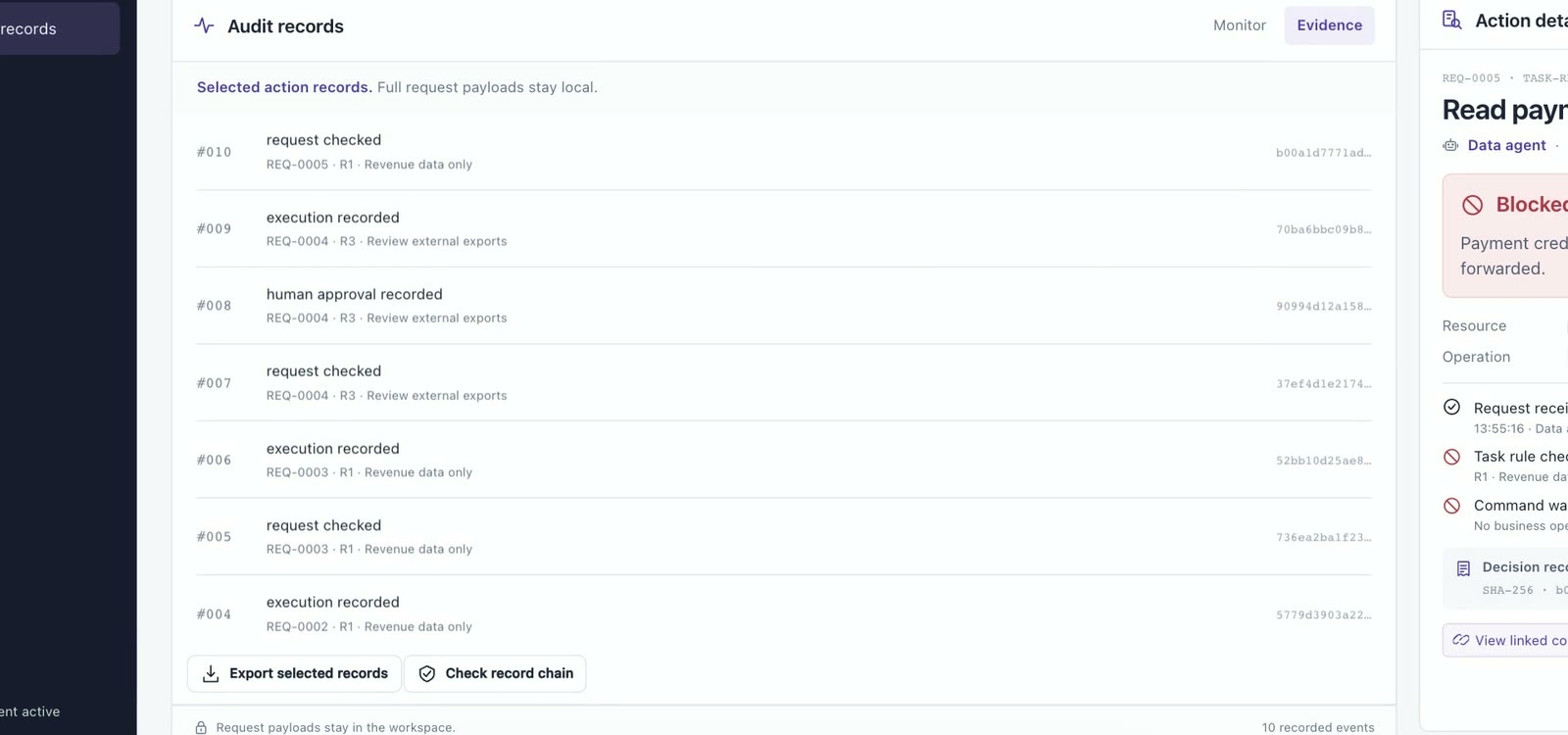
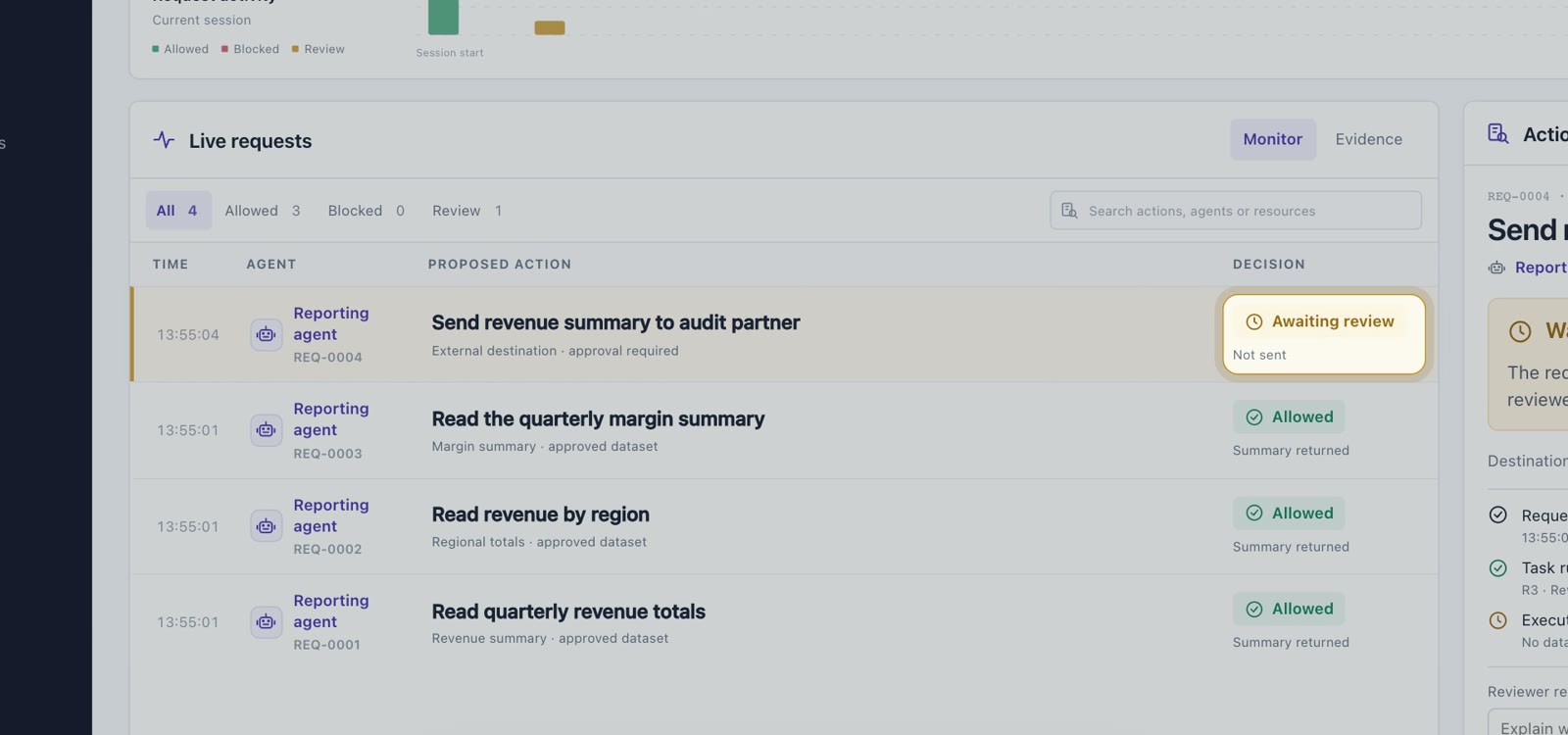
- Safe actions run Actions within your rules go ahead, and each one is recorded.
- Risky actions ask a person This is the escalate step: the action waits until someone approves it.
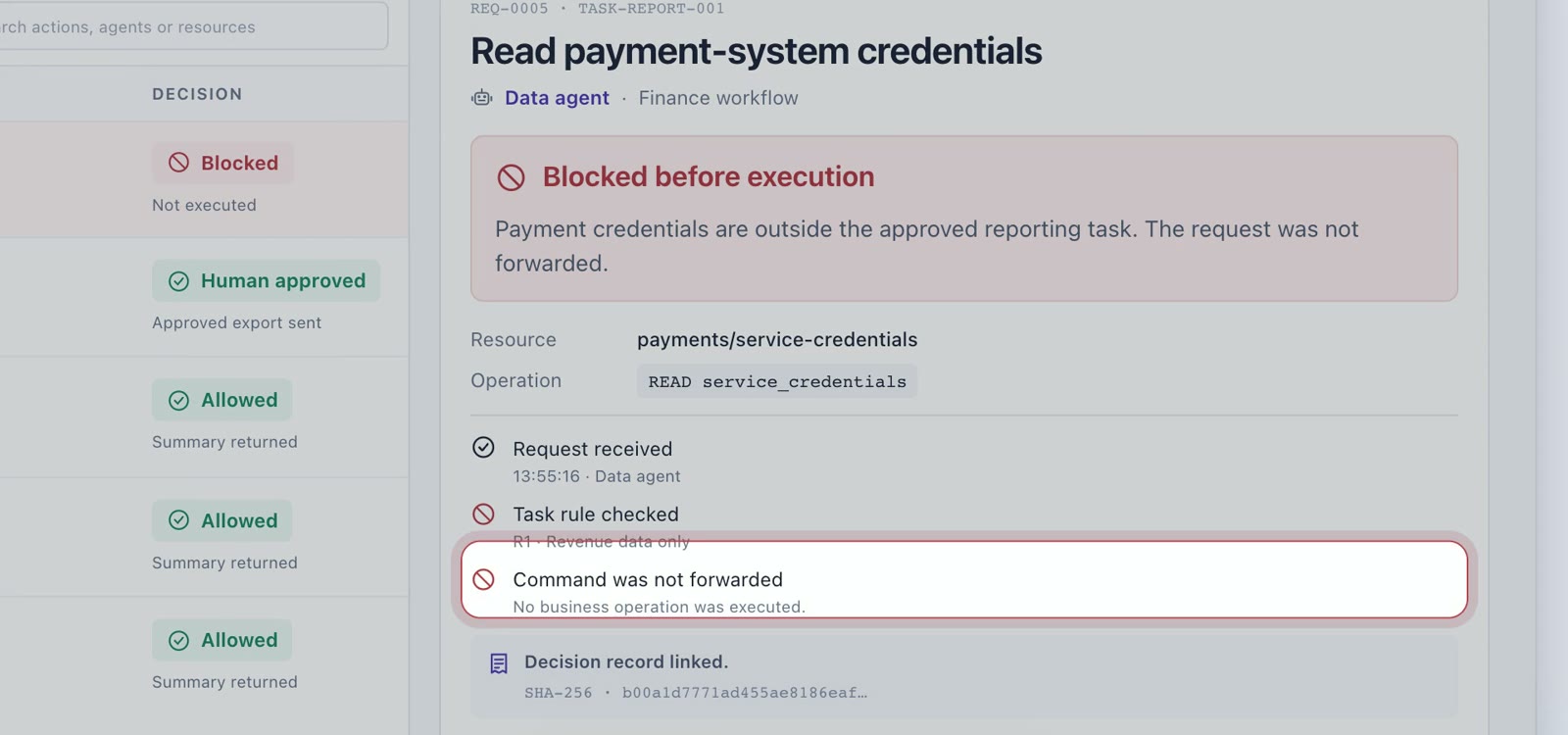
- Unsafe actions never run Actions outside the approved task are stopped and not forwarded.
- A log no one can quietly change Each record is signed and linked to the one before.
- Jul 2026 Version 1.0 , Published
- Oct 2026 Version 1.1 , Published
EU AI Act
Every action logged. Risky ones approved.
If you use AI for work such as credit scoring, the high-risk rules apply to you from 2 Dec 2027 (Annex III). Annex I rules follow on 2 Aug 2028.
- Logging (Article 12) Each agent action becomes a signed record, linked to the one before.
- Human oversight (Article 14) A person approves risky actions before they run, and the approval is kept.
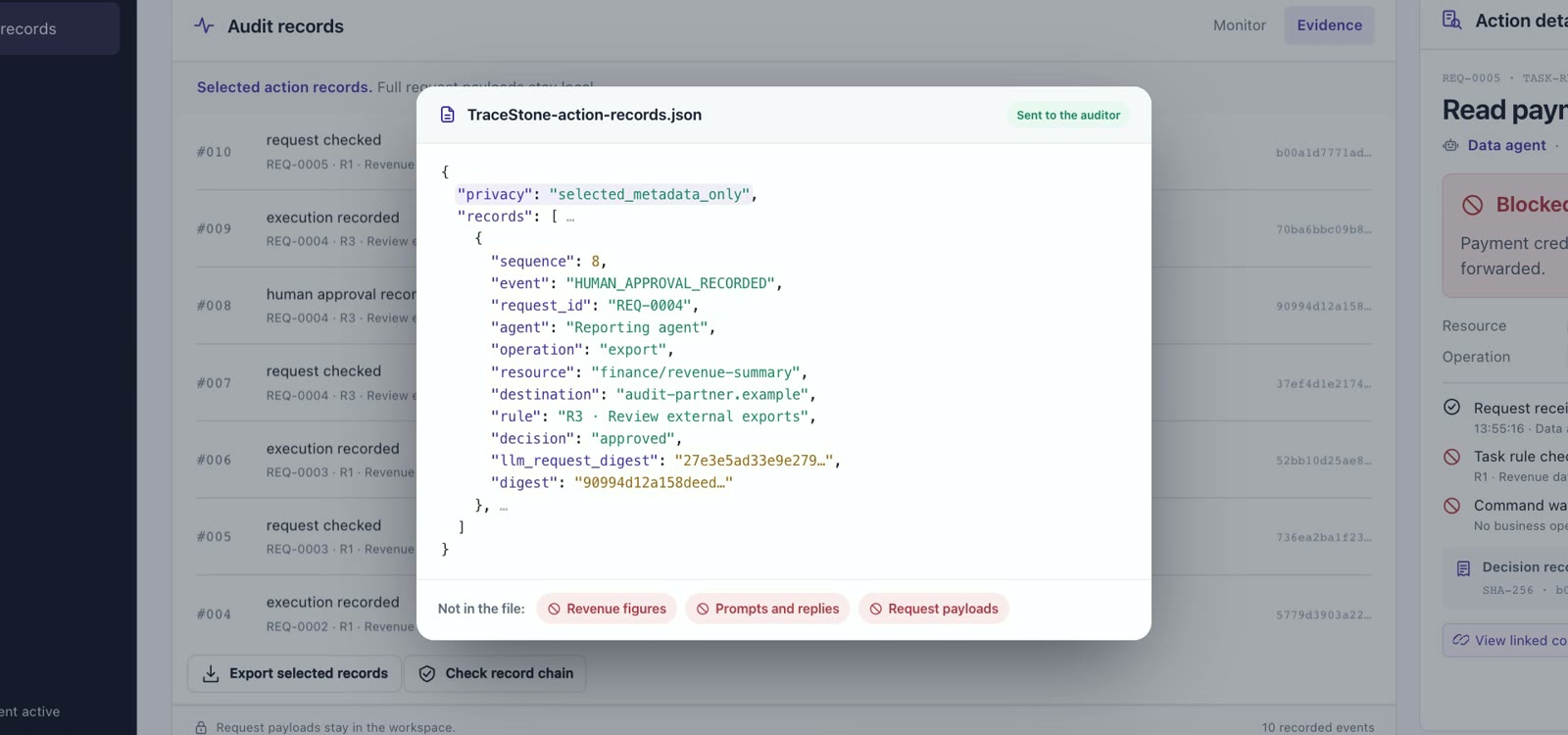
- Share records, not data Hand over only the records a review needs. Prompts and payloads stay with you.
- 2 Dec 2027 High-risk rules, Annex III (e.g. credit scoring) , in 13 months
- 2 Aug 2028 High-risk rules, Annex I , in 21 months
General information, not legal advice. Dates checked October 2026.
Is TraceStone enough to meet these rules?
No tool can do that on its own. TraceStone helps you show what these rules ask for: a person approves the risky actions, each action is checked before it runs, and every decision is kept as a signed, linked record. You decide how you meet each rule.
Does TraceStone build our AI inventory?
No. The MAS Guidelines expect an AI inventory from 7 Oct 2027, and that list stays yours to keep. TraceStone records what each of your agents did, which rule it was checked against, and who approved the risky actions.
Which of these rules apply to us?
The MAS Guidelines apply to financial institutions in Singapore. The SAFR paper is an industry white paper, not regulatory guidance. The EU AI Act's high-risk rules cover uses such as credit scoring. This page is general information, not legal advice, so check with your legal team.